📌 Disclaimer
Prices, schedules, tour details, flight routes, visa requirements, and all other information on this page are based on data at the time of writing. Fares, availability, and policies may change. Please verify current details on the official website before booking.
Why Get an eSIM for Malawi#
Traveling to Malawi requires reliable mobile data for navigation, translation, and communication, making an embedded subscriber identity module an essential tool for modern trips. Traditional physical cards require finding a local kiosk upon arrival, dealing with paper registration, and physically swapping tiny plastic chips out of your phone tray. With an embedded digital profile, you can connect to local cellular networks the moment your airplane touches down on the tarmac. This technology removes the risk of losing your home carrier’s primary card while traveling through international airports. You can purchase your digital plan online before leaving home, install the profile via a simple QR code, and activate your data connection immediately upon arrival in the Warm Heart of Africa.

Choosing a digital profile also protects you against the exorbitant daily roaming fees charged by domestic home providers. Traditional carriers often bill massive amounts for minimal data usage abroad, whereas a dedicated travel profile provides a transparent, prepaid data allowance with zero surprise charges on your monthly bill. Business travelers and casual vacationers alike benefit from maintaining their primary phone number active for incoming text messages or urgent two-factor authentication codes while simultaneously using the digital data profile for local internet access. This setup ensures seamless connectivity whether you are checking lodge reservations, pulling up digital maps, or updating family back home.
Furthermore, managing your connectivity digitally eliminates waste. There is no physical plastic to discard, and you do not need to carry a specialized pin tool to swap components. If your travel plans change or you need to switch between different networks, digital profiles can be downloaded and activated directly through your device settings menu. Preparing your connectivity in advance ensures that you can request a ride-sharing vehicle, look up restaurant reviews, or confirm tour bookings without frantically searching for public wireless internet access at the airport terminal.
Available Plans Compared#
Travelers visiting Malawi can choose from four distinct digital data plans designed to fit various trip lengths and data consumption habits. The smallest option is the 1 GB Malawi travel eSIM valid for 7 days, priced at $8. This compact package suits short stopovers or light users who only check emails and send occasional instant messages. For slightly longer journeys, the 2 GB Malawi travel eSIM valid for 15 days costs $14, offering a balanced middle ground for travelers needing moderate connectivity over a two-week period.

For longer stays, two 30-day options provide extended coverage. The 3 GB Malawi travel eSIM valid for 30 days is available for $19, while the larger 5 GB Malawi travel eSIM valid for 30 days costs $32. Comparing these choices reveals distinct pricing structures across data amounts and validity periods. The 1 GB option costs $8 per gigabyte. The 2 GB option reduces the per-gigabyte rate to $7. The 3 GB plan lowers the cost further to $6.33 per gigabyte. Finally, the 5 GB plan prices out at $6.40 per gigabyte. Reviewing these figures helps users match their specific digital habits—such as streaming video versus basic web browsing—to the appropriate data allocation before purchasing.
Best Value: Which Plan Saves You the Most#
When analyzing the financial breakdown of all available options, the 3 GB Malawi travel eSIM valid for 30 days stands out as the best value choice, priced at $19 for 3 gigabytes of data, which breaks down to $6.33 per gigabyte. This specific package offers the lowest cost per gigabyte among all four choices, beating both the smaller 1 GB plan at $8 per gigabyte and the 2 GB plan at $7 per gigabyte. Even when compared to the largest 5 GB plan priced at $32—which equals $6.40 per gigabyte—the 3 GB plan delivers superior cost-efficiency for moderate data users.

Choosing this recommended option provides sufficient data for standard web browsing, checking flight status updates, navigating via online maps, and communicating through messaging apps over an extended stay of up to a month. Travelers who want to avoid running out of data mid-trip while keeping their per-gigabyte spending to a minimum will find that the 3 GB package strikes the ideal balance between cost and allocation. It eliminates the need to purchase multiple small packages or pay a premium for lower-tier options, ensuring a smooth online experience throughout your journey.
How to Install Your eSIM Before Traveling#
Installing your digital profile before departure ensures you have internet access the moment you land in Malawi without needing to locate a public wireless network. First, verify that your specific smartphone model is carrier-unlocked and compatible with digital SIM technology. Once your purchase is complete, you will receive a confirmation containing a QR code via email. Open the settings menu on your mobile device, navigate to the cellular or mobile data section, and select the option to add a new data plan or digital profile.

Use your phone’s camera to scan the provided QR code from your computer screen or a printed page. The device will automatically download the profile details and prompt you to label the new line, such as “Malawi Travel.” It is recommended to complete this installation step while still at home using a stable home internet connection. Keep the line toggled off until you arrive at your destination. Upon landing, simply turn on the data roaming switch for that specific digital profile while keeping your primary home line disabled for data, preventing any accidental roaming charges from your domestic carrier.
eSIM vs Physical SIM vs Roaming#
Understanding the differences between digital profiles, local physical cards, and international roaming helps travelers make informed connectivity decisions for Malawi. International roaming through your home carrier is historically the most convenient method because it requires zero setup, but it is simultaneously the most expensive. Carriers often charge exorbitant fees per megabyte, leading to unexpectedly massive bills upon returning home.

Purchasing a local physical card upon arrival in Malawi offers cheaper local rates, but the process involves logistical hurdles. You must locate an operational telecom shop, wait in long queues, and present your passport for mandatory government registration. Furthermore, physical cards require you to remove your home carrier’s primary chip, which temporarily disables your normal phone number and puts your physical card at risk of being lost or damaged.
In contrast, a digital profile combines the low cost of local connectivity with the ultimate convenience of remote setup. You purchase the profile online before departure, install it in minutes, and activate it upon arrival. Your home phone number remains safely inside your phone for necessary two-factor texts, while the digital profile handles all local data routing. This method avoids airport kiosk lines, eliminates physical waste, and provides transparent upfront pricing without hidden fees.
Tips for Staying Connected in Malawi#
Maximizing your data allowance during a trip to Malawi requires mindful device management and proactive settings adjustments. Because mobile network coverage can vary significantly between major urban centers and remote safari regions, conserving your data ensures you stay online when you need it most. Start by navigating to your phone’s application settings and disabling automatic background app refreshes. Many apps continually download updates, fetch emails, and sync photos in the background, consuming precious gigabytes without your direct awareness.

To further reduce data consumption, download offline map regions for the specific areas you plan to visit before heading out. Navigation applications consume considerable data when pulling real-time map tiles, so pre-downloading routes ensures seamless navigation even in areas with intermittent cellular signals. When managing media, adjust your streaming service settings to standard definition rather than high definition, and restrict large photo backups and video uploads to occur only when connected to a secure hotel wireless network.
Finally, monitor your remaining data balance regularly through your device’s built-in usage tracker. Keeping an eye on your consumption allows you to pace your internet usage over the duration of your trip, ensuring your data allotment lasts until the end of your stay without unexpected interruptions in connectivity.
📌 Disclaimer
Prices, schedules, tour details, flight routes, visa requirements, and all other information on this page are based on data at the time of writing. Fares, availability, and policies may change. Please verify current details on the official website before booking.
Top Tours & Activities

1 GB Malawi travel eSIM valid for 7 days
eSIM Plan
From $8

2 GB Malawi travel eSIM valid for 15 days
eSIM Plan
From $14
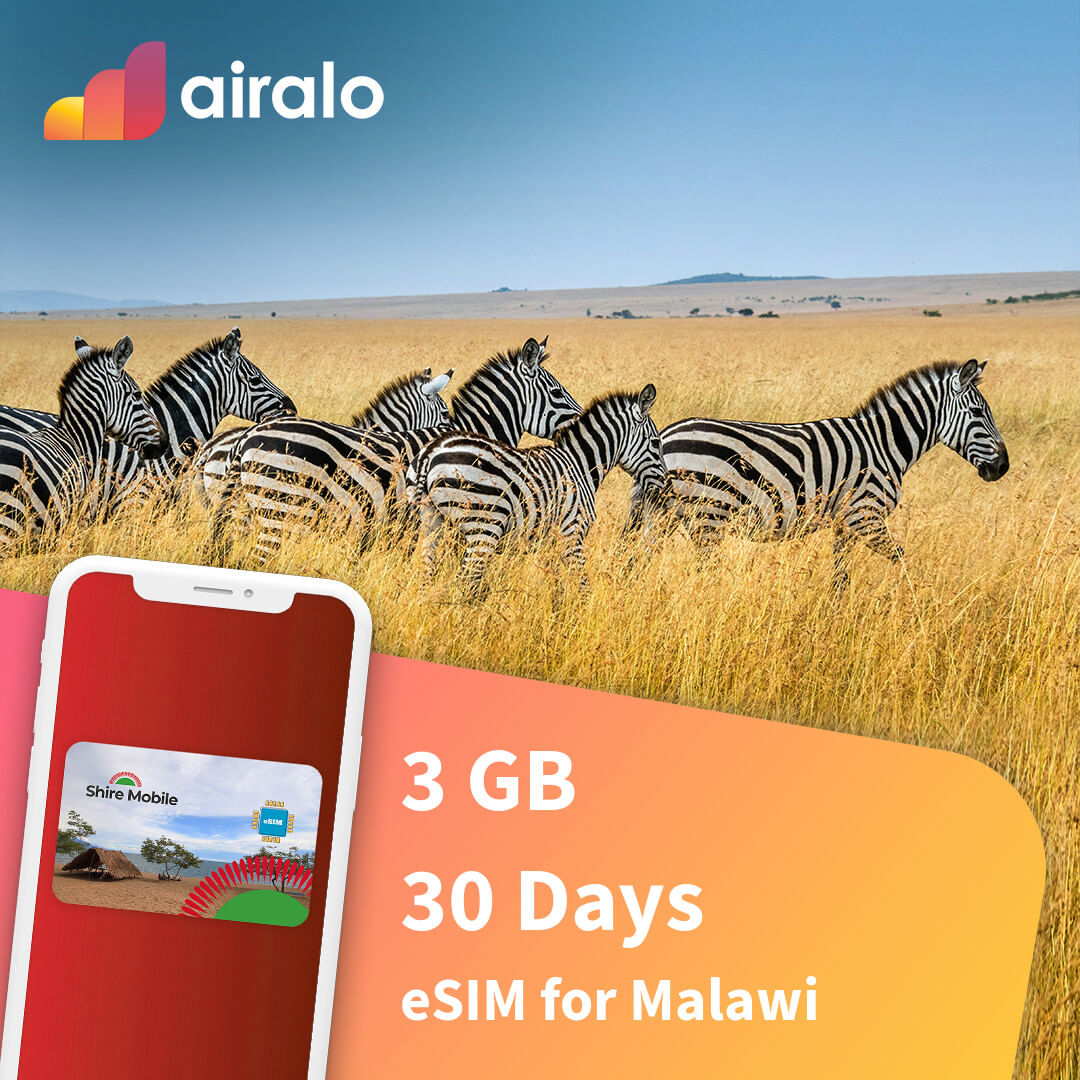
3 GB Malawi travel eSIM valid for 30 days
eSIM Plan
From $19
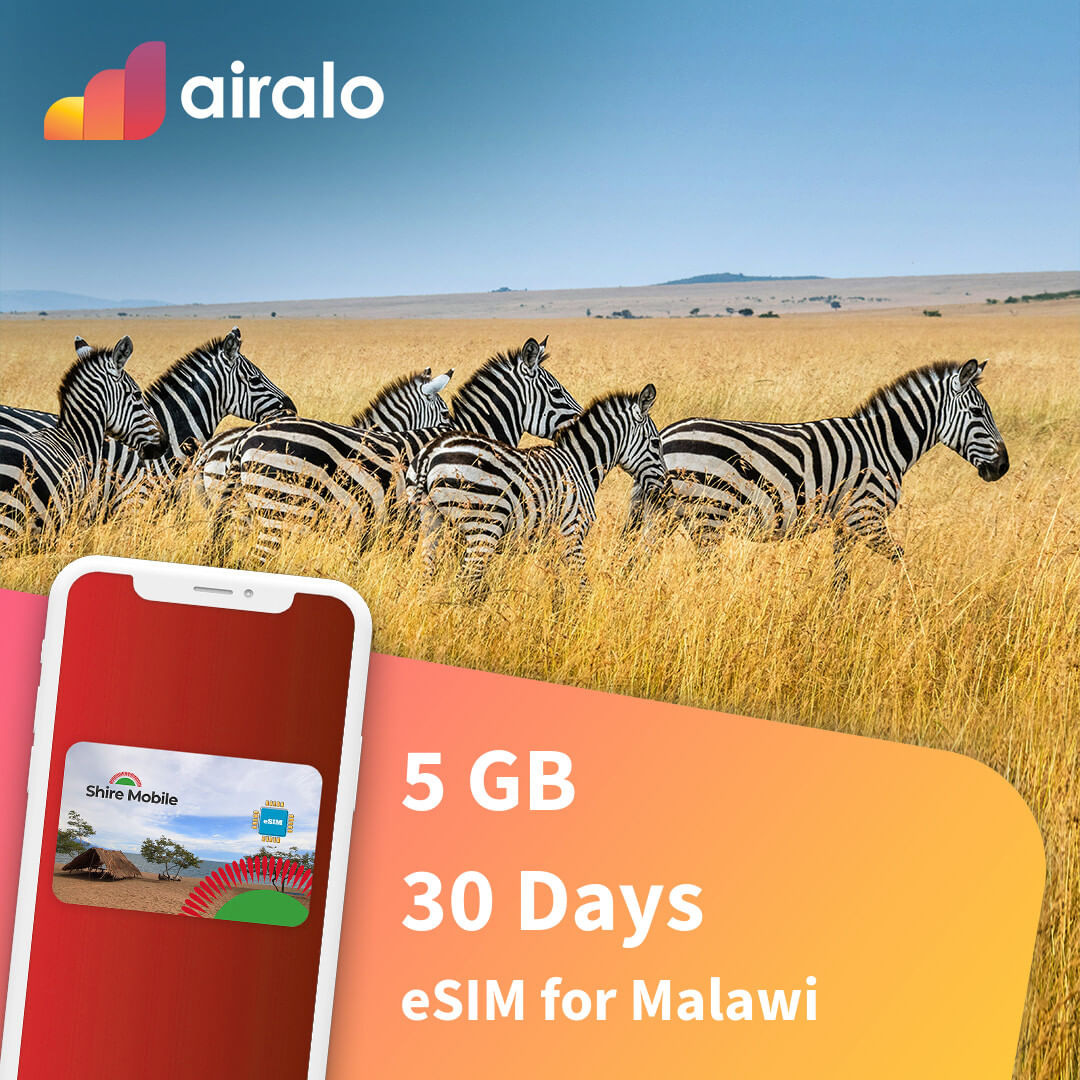
5 GB Malawi travel eSIM valid for 30 days
eSIM Plan
From $32
📌 More about Malawi